Archive for the 'Photo-Blog' Category

New farmers market proves a hit

Sunday, July 8th, 2007
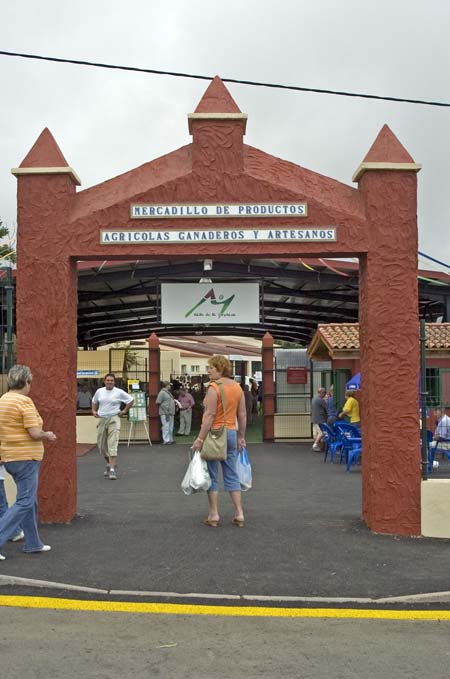
farmers market A new farmers market created in the heart of the traditional agricultural area on the island of Tenerife is proving to be a shrewd development. In the heart of the Orotava Valley in the town of La Orotava, the unofficial agricultural capital of the island for centuries, the new purpose-built market opened last month and has already established a popular following with locals and visitors alike. Nearly €300,000 was invested in a 1,500 square metre site to provide a covered market area big enough to house 40 stalls, together with a children’s playground, cafe/bar and parking for over 100 cars. The market, which runs on Saturdays and Sundays from 8.30am to 3pm, sells a good range of local produce and crafts, including fruit and vegetables, cheeses, honey, bread, cakes, eggs, wine, plants and flowers....

It’s Tajinaste time on Teide

Wednesday, June 27th, 2007
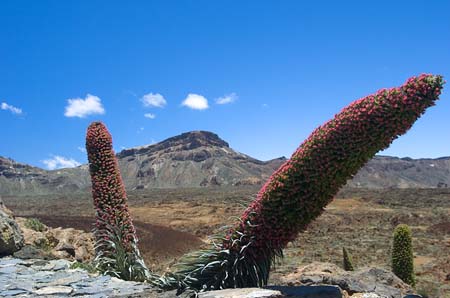
tajinaste tenerife Late spring and early summer is Tajinaste time up on Mount Teide, a time when the wild and rugged mountain landscape is briefly tamed by the blooms of a number of brightly coloured plants, most of which are endemic to the island of Tenerife. Tajinaste rojo, or Echium wildpretii to give it its correct name, is the most spectacular, a species of bugloss which can grow to over 10ft tall. Echium is a genus of around 60 species of flowering plant which flourish across Africa, Europe, Madeira and the Canary Islands. Some species are also found in east Asia and Australia. The sub-alpine zones of the ravines around Mount Teide are the native habitat of the Tajinaste variant, which thrives under the hot sun and the arid and dry conditions there. It can also tolerate temperatures as low as -5C. A herbaceous biennial, the Tajinaste’s two-year cycle ...
Dragon tree reputed to be a thousand years old

Monday, April 2nd, 2007
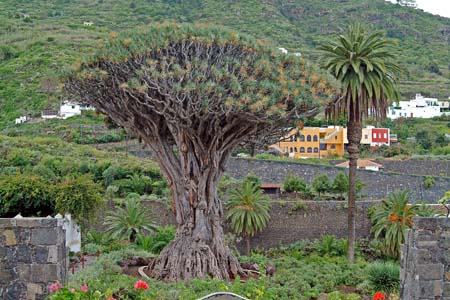
dragon tree tenerife The Dragon Tree, or Drago, is one of the iconic symbols of Tenerife. It is very slow growing, but when it attains maturity it usually has a thick trunk which is crowned by a thick umbrella-shaped canopy of dagger-like leaves. It gets its popular name from the secretion of a reddish resin, know as dragon’s blood, which appears when either the bark or leaves are cut. It is thought that the original inhabitants of the island, the Guanches, used the blood-red sap from the tree in medicines and as an embalming fluid. Because it grows so slowly, generally taking ten years to reach a height of one metre, many of the taller specimens are believed to be hundreds of years old. The oldest, in the town of Icod de los Vinos (pictured above) in the north of the ...
Tiger, tiger burning bright…

Wednesday, March 21st, 2007
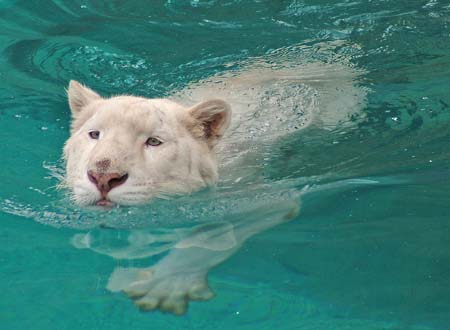
White tiger swimming It's a common misconception that cats hate swimming in particular and water in general. My experience of the domestic moggy is strictly limited, but I've watched Prince, one of the star attractions at Loro Parque, Tenerife's biggest tourist attraction, enjoying a dip in his private pool on several occasions. He loves it. Indeed, tigers love water, and white tigers particularly adore it. White tigers have the reputation of being good swimmers but poor climbers. Which is strange really because the white tiger is not a sub-species as such, but rather a genetic misfit. White tigers are rarely found in the wild. In about 100 years only 12 white tigers have been seen in the wild in India. They are almost extinct and most of the ones living are in captivity, mostly in zoos, though rarely are they as well catered for as at ...
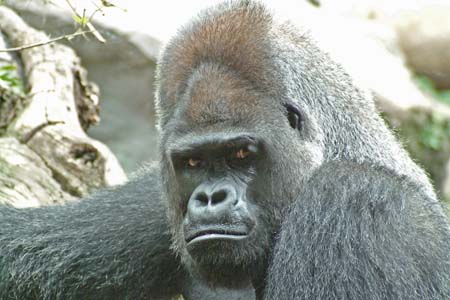
Exchanging a glance with a gorilla

Monday, March 19th, 2007
Gorilla Loroparque ‘There is more meaning and mutual understanding in exchanging a glance with a gorilla than any other animal I know.’ An estimated 500 million people worldwide heard Sir David Attenborough whisper those words as he lay next to a 100kg female gorilla in Rwanda nearly 30 years ago. His encounter with the gorillas in the BBC natural history series Life on Earth is one of television’s most memorable. At Loro Parque in Tenerife, you can’t get quite as close to the gorillas as David Attenborough did all those years ago. But, as the pictures above and below show, you do get a pretty good view of the park’s gorilla enclosure, which covers 3,500 square metres and houses six gorillas in conditions very like their native habitat. The six gorillas are part of an experimental group on loan from various European zoos and form part of ...